
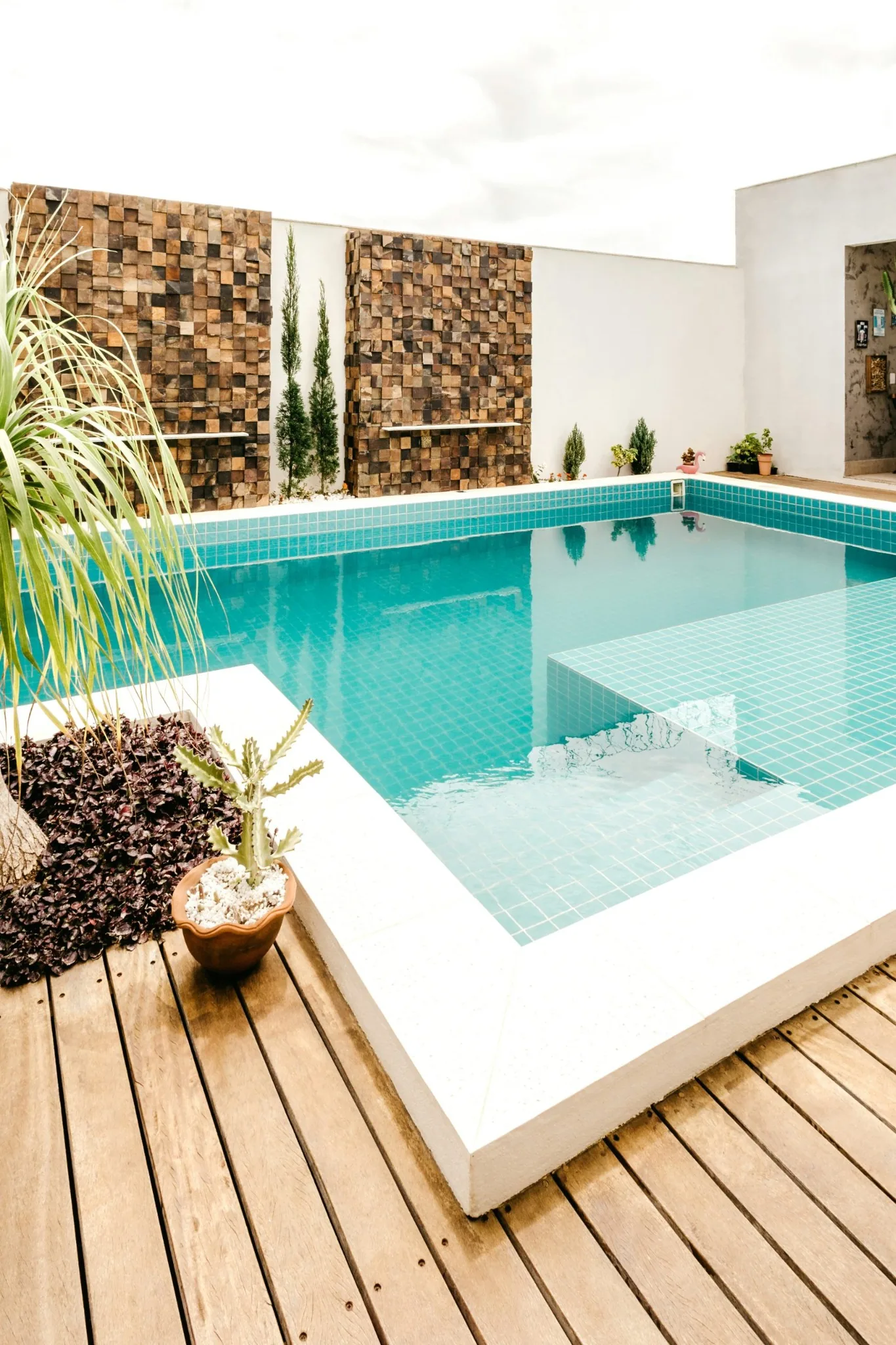
Pool Shell
What the pool shell is, how concrete and fibreglass vessels are built on Sydney sites, and which structural details separate sound construction from shortcuts that show up years later.
What the pool shell actually is
The shell is the watertight structural vessel that holds the pool volume. Everything else, coping, paving, fencing, pumps and heaters, attaches to or surrounds this core.
Inground shells sit below natural ground level and must resist soil pressure, water thrust and seasonal ground movement. Above ground shells transfer loads to a frame or deck, but the shell wall still carries water load.
When owners discuss shell problems, they usually mean cracking, movement, surface delamination or leaks at the structure, not a dirty filter or unbalanced chemistry.
Concrete and gunite shells built on site
Custom concrete pools begin with excavated shape, steel reinforcement fixed to engineer detail, then concrete placed by spray (often called gunite or shotcrete) or conventional pour methods. The result is a monolithic form tailored to the block.
Wall thickness, steel spacing and bond beam detail respond to soil reports on Sydney clay, sandstone and sand. A shell engineered for your site handles long-term pressure better than a generic thickness copied from another job.
After structural concrete cures, waterproofing and interior finishes are applied. The finish is not the structure, but poor preparation can mask shell issues until they reappear through staining or delamination.
Our /concrete-pools/ service focuses on shells drawn for each property rather than catalogue dimensions.
Fibreglass shells as pre-formed vessels
Fibreglass shells are manufactured in a mould, transported to site and set into a prepared hole on a compacted base. The gelcoat surface is part of the factory laminate rather than a separate site-applied render.
Installation quality depends on level support, correct backfill and proper plumbing penetrations. A sound fibreglass shell with poor bearing can flex under soil load, while a well-supported shell performs for many years.
Shape and depth are fixed at manufacture. Owners trade custom geometry for faster shell placement when a standard size fits the backyard.
How shell construction unfolds in sequence
Excavation establishes the hole profile and shelf for steps or benches cast into concrete shells. For fibreglass, the hole must match shell tolerances and crane placement.
Plumbing rough-in is embedded before or immediately after shell placement so returns, suctions and cleaner lines sit in the right walls.
Structural shell placement is followed by curing time for concrete, then interior finish, coping tie-in and barrier installation before fill.
Skipping curing or rushing backfill around a fresh shell invites movement cracks that are expensive to diagnose once paving is complete.
Structural durability and ground movement
Sydney sites move. Clay in the Hills district swells and shrinks with moisture; coastal sand drains freely but can shift if groundwater is mismanaged. Shells must be designed for the actual soil class, not assumed stable fill.
Quality construction includes controlled jointing where the shell meets paving, competent steel laps and documented concrete strength suitable for the engineer’s specification.
Fibreglass shells rely on uniform support along the base and walls. Void under the floor creates point loads that show up as stress patterns in the laminate over time.
Signs of sound shell work versus corner cutting
Sound work shows consistent cover to steel, clean penetrations with sleeved fittings, straight bond beams and an engineer or certifier comfortable signing structural stages.
Corner cutting appears as exposed steel at finishes, honeycombed concrete hidden under render, improvised steps added after the pour without reinforcement, or fibreglass set on uneven fill without remediation.
A cheap quote that deletes engineering, curing time or proper drainage around the shell often costs more when /pool-renovations/ become necessary within a short ownership period.
Choosing the right shell path for your block
Irregular shapes, integrated ledges and site-specific engineering favour concrete. Straightforward rectangles with crane access may suit fibreglass when the mould dimensions align.
Discuss shell type alongside /inground-pools/ layout, access and long-term plans before contracts are signed. Changing shell philosophy mid-build is rarely practical.
A builder who explains how the shell will be formed, cured and inspected on your soil type is showing the transparency you want before excavation starts. Reach out via /contact-us/ or browse /locations/ for local project experience.
Frequently asked questions
Is gunite the same as concrete for pool shells?
Gunite or shotcrete is a method of placing concrete pneumatically onto reinforced steel. The shell is still a concrete structure; the term describes application technique rather than a different material family.
Which shell type lasts longer?
Both can serve long periods when engineered, installed and maintained correctly. Concrete allows bespoke structural detail; fibreglass depends on factory quality and flawless support at installation.
Can a damaged shell be repaired?
Many concrete issues can be remediated with structural repairs and new interior finishes. Fibreglass repairs are possible for local damage but depend on access and laminate condition across the whole shell.
Does the interior finish protect the shell?
Finishes provide waterproofing and aesthetics but do not replace structural steel and concrete or laminate strength. A beautiful pebble interior does not compensate for under-reinforced walls.